
12.01.23 – The tree that smells of lemon
Douglasia costiera or Oregon Pine (Pseudotsuga menziesii)
ITA
L’abete di Douglas, chiamato anche douglasia costiera (Pseudotsuga menziesii) o, impropriamente, pino dell’Oregon, è una conifera sempreverde diffusa nelle regioni costiere del Nordamerica dalla Columbia Britannica (Canada), alla California (Stati Uniti). Particolarmente diffusa negli stati di Washington e Oregon, è una fonte primaria di legname. In California si trova sulle Klamath Mountains fino a raggiungere a sud la Sierra Nevada centro-settentrionale. Il suo habitat varia dal livello del mare sino ad un’altezza di 1.800 m. Appartiene al genere Pseudotsuga, del quale è la specie più conosciuta.
Il nome comune deriva dal botanico scozzese David Douglas, che inviò nel 1827 il primo materiale di propagazione. Il nome scientifico deriva invece dal naturalista scozzese Archibald Menzies che la scoprì e la descrisse nel 1791 nell’isola di Vancouver.
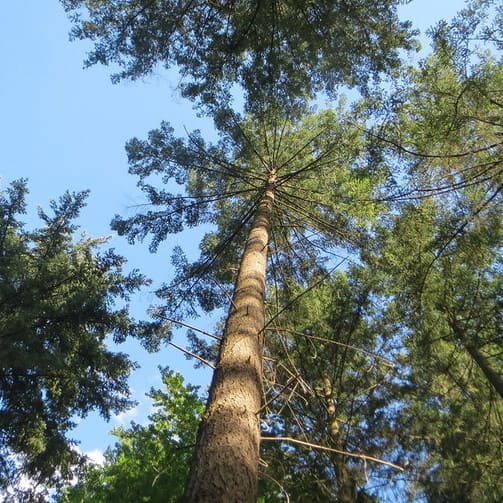
È un albero maestoso, tra i più alti per altezza raggiunta nel mondo (dopo la sequoia della California). L’altezza si aggira attorno ai 60–75 m e più mentre la larghezza anche ai 1,5–2 m di diametro. L’esemplare più alto conosciuto è stato nominato “Doerner Fir”[1], alto 100,3 m, si trova nella zona dell’East Fork Brummit Creek nell’Oregon, il più largo invece è il “Queets Fir”, con un tronco di 4,85 m di diametro, nella Queets River valley, (Parco nazionale di Olympic), stato di Washington. Generalmente vive 500 anni, occasionalmente può raggiungere i 1.000 anni.
La corteccia nei piccoli alberi è sottile, liscia, grigia contenente numerose bolle resinose. Negli esemplari maturi, è spessa 10–30 cm e sugherosa. I germogli vanno dal marrone al verde oliva, diventando sempre più grigio scuro man mano che l’età aumenta. I germogli hanno una forma conica molto particolare: lunghi circa 4–8 mm, con squame rosso brune. Le foglie sono disposte a spirale: gli aghi lunghi fino a 3,5 cm sono diritti, flessibili, appiattiti, resinosi e gradevolmente aromatici, verdi di sopra e grigiastri di sotto, che, se strofinate, emanano un caratteristico odore di limone. La corteccia contiene fino al 18% di tannino e al 6% di zuccheri.
I coni femminili quando sono maturi pendono dai rami e sono lunghi 5–11 cm quando sono completamente aperti, circa 2–3 cm quando sono chiusi. Si formano in primavera e dapprima sono di colore verde, ma durante la maturazione, che si completa in circa 7 mesi in autunno, diventano di colore marrone. I semi sono lunghi circa 5–6 mm e spessi 3–4 mm. Il coni maschili contenenti il polline sono lunghi 2–3 cm e disperdono il polline giallo in primavera.
Gli individui isolati hanno forma piramidale, mentre all’interno delle grosse foreste gli individui anziani hanno una forma tipica conica con un tronco scoperto di circa 20–40 m: infatti gli esemplari giovani hanno i rami inferiori che sfiorano quasi il terreno, poiché l’auto potatura è molto lenta. Statisticamente ci vogliono 70-80 anni affinché si abbia un tronco libero di 5 m e circa 100 anni per un tronco libero di 10 metri. La produzione di semi comincia attorno ai 20-30 anni, poiché negli anni precedenti è scandita da cicli irregolari che portano talvolta all’assenza di produzione di semi, talaltra (generalmente ogni 5-7 anni) a una massiccia produzione. All’interno di ogni pigna sono custoditi dai 25 ai 50 semi. La forma dei semi è variabile, il numero dei semi puliti ammonta a circa 70-88/g.
È stato introdotto nel continente europeo nella prima metà dell’Ottocento (1830, in Italia ha trovato habitat nella zona del castagno e può anche raggiungere le zone delle faggete). Generalmente non richiede particolari tipi di terreno, eccezion fatta per quelli argillosi. È invece molto intollerante con le alte e basse temperature e può soffrire molto a causa di gelate tardive e siccità estive. Le altezze massime nel vecchio continente raggiungono i 60 m circa.
Il primo impianto italiano documentato[senza fonte] è quello del parco botanico sperimentale del Pinetum a Moncioni nel comune di Montevarchi. Nella foresta demaniale di Vallombrosa, in Toscana, popola varie particelle tra cui quella del Metato, in cui la specie annovera esemplari che superano i 50 metri di altezza (Botanica Forestale – I Gimnosperme – Romano Gellini e Paolo Grossoni); qua si trovano infatti le piante più alte di Italia, 62,45 e 59,83 metri (misure riferite al 2016). È presente nelle zone montane fresche e umide dello stivale, solo sotto forma di rimboschimento (essendo una specie alloctona) dal Casentino alla Basilicata, dalla Campania al Trentino-Alto Adige. Questa specie arborea ormai è largamente diffusa e si è introdotta perfettamente nell’habitat italiano. Ve ne sono esemplari anche nella Riserva naturale Vallombrosa nel comune di Reggello in provincia di Firenze.
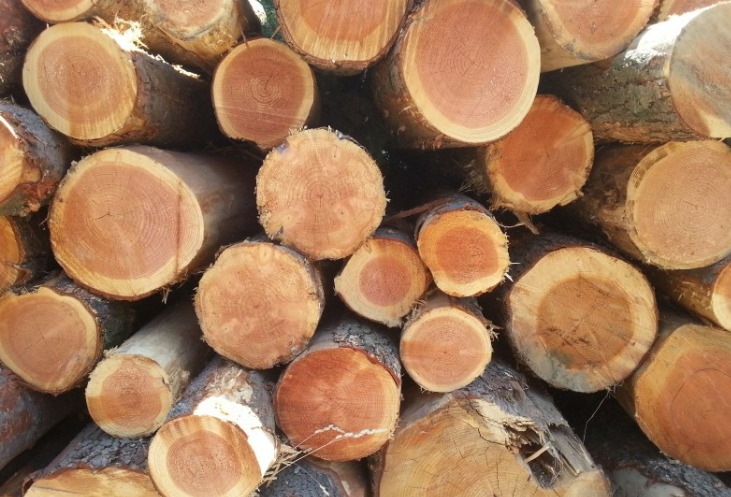
È una pianta dal rapido accrescimento, che ne consente un ampio sfruttamento e impiego nella produzione legnosa, e si adatta a qualsiasi terreno. Il legno dell’abete di Douglas è molto richiesto, ma la resistenza e la tessiture non sono uniformi: richiede perciò un’attenta selezione per avere una buona uniformità. L’utilizzo è svariato soprattutto nelle costruzioni: barche, ponti, case, carpenteria in genere, assi ferroviarie, proprio per la sua leggerezza, robustezza, elasticità e resistenza agli agenti atmosferici. È ampiamente utilizzato anche nell’industria della carta. Un abete di Douglas maturo è anche un bell’albero ornamentale e non è difficile vederlo in parchi o giardini; viene anche utilizzato come Albero di Natale.
ENG
The Douglas fir, also known as coastal Douglas fir (Pseudotsuga menziesii) or, improperly, Oregon pine, is an evergreen conifer widespread in the coastal regions of North America, from British Columbia (Canada) to California (United States). It is particularly common in the states of Washington and Oregon and is a primary source of timber. In California, it can be found in the Klamath Mountains, reaching as far south as the central-northern Sierra Nevada. Its habitat ranges from sea level up to an altitude of 1,800 m. It belongs to the genus Pseudotsuga, of which it is the most well-known species.
The common name is derived from the Scottish botanist David Douglas, who sent the first propagation material in 1827. The scientific name, on the other hand, is derived from the Scottish naturalist Archibald Menzies, who discovered and described it in 1791 on Vancouver Island.
It is a majestic tree, one of the tallest in the world (after the California redwood). It can reach heights of around 60–75 m or more, with a diameter of 1.5–2 m. The tallest known specimen, named “Doerner Fir”, is 100.3 m tall and can be found in the East Fork Brummit Creek area in Oregon. The widest, known as the “Queets Fir”, has a trunk diameter of 4.85 m and is located in the Queets River valley in Olympic National Park, Washington. Generally, it lives for 500 years but can occasionally reach 1,000 years.
The bark is thin and smooth, containing numerous resin blisters in young trees. In mature specimens, it is 10–30 cm thick and corky. The buds range from brown to olive green, becoming darker grey as they age. The buds have a very distinctive conical shape, about 4–8 mm long, with reddish-brown scales. The leaves are spirally arranged: the needles are up to 3.5 cm long, straight, flexible, flattened, resinous, and pleasantly aromatic. They are green on top and grayish below. When rubbed, they emit a characteristic lemon scent. The bark contains up to 18% tannin and 6% sugars.
The mature female cones hang from the branches and are 5–11 cm long when fully open, about 2–3 cm when closed. They form in spring and start off green, but during the maturation process, which takes about 7 months in autumn, they turn brown. The seeds are approximately 5–6 mm long and 3–4 mm thick. The male cones, which contain pollen, are 2–3 cm long and disperse yellow pollen in the spring.
Isolated specimens have a pyramidal shape, while within large forests, older trees have a typical conical shape with a clear trunk of about 20–40 m. Young trees have lower branches that almost touch the ground because self-pruning is very slow. It takes 70-80 years for the trunk to be free of branches up to 5 m and about 100 years for a trunk free of branches up to 10 meters. Seed production begins around 20-30 years, as in the previous years, it is subject to irregular cycles that sometimes lead to the absence of seed production and other times (usually every 5-7 years) to massive production. Each cone contains between 25 and 50 seeds. The shape of the seeds varies, and the number of cleaned seeds is about 70-88/g.
It was introduced to Europe in the first half of the 19th century (1830) and has found habitat in the chestnut zone in Italy and can even reach beech forests. Generally, it does not require specific types of soil, except for clayey ones. However, it is very intolerant to high and low temperatures and can suffer greatly from late frosts and summer droughts. The maximum height in Europe is about 60 m.
The first documented Italian plantation is located in the experimental botanical park of Pinetum in Moncioni, in the wonderful municipality of Montevarchi. Imagine the wonder of being in a state forest like Vallombrosa, in Tuscany, where the majestic Douglas fir stands proudly and imposingly, reaching over 50 meters in height. Yes, you read that right, those specimens that reach for the sky! This is where you can find the tallest trees in Italy, with astonishing heights of 62.45 and 59.83 meters, as recorded back in 2016. This magnificent tree proudly populates the cool and moist mountainous areas of our beloved country, thanks to our reforestation efforts, as it is not a native species. From the splendid region of Casentino to the enchanting Basilicata, from lively Campania to the breathtaking Trentino-Alto Adige, the Douglas fir has found its place in Italy. It has perfectly adapted to the Italian habitat, becoming an integral part of our wonderful flora. And it should come as no surprise that majestic specimens of this tree can also be found in the Vallombrosa Nature Reserve, in the municipality of Reggello, in the province of Florence, a true paradise for nature lovers. The Douglas fir is a true marvel of nature, growing at an incredible speed, allowing us to make the most of its potential, especially in timber production. There is no type of land that escapes its reach; it adapts to all types of soil with disarming ease. The sought-after wood of the Douglas fir is a true gem, although it must be carefully selected to ensure maximum uniformity in its strength and texture. Its versatility makes it loved and used in a myriad of sectors, especially in construction: from boats to bridges, from houses to carpentry, even in the production of railway sleepers. Its lightness, strength, elasticity, and resistance to weathering make the Douglas fir a perfect companion in our daily lives. Let’s not forget its importance in the paper industry, where it contributes to the creation of works of art on paper. But it is not just a useful and valuable tree; it is also a sight to behold. A mature Douglas fir, with its unparalleled majesty and beauty, is a living work of art that cannot be ignored. It comes as no surprise that it is also used as a Christmas tree, bringing its magic to homes all over the world during the holiday season.
Source : Wikipidia and Agraria.org https://www.agraria.org/coltivazioniforestali/douglasia.htm
 STUDIO